
Waterproof Breathable Membrane: TPU / ePTFE / PU Guide
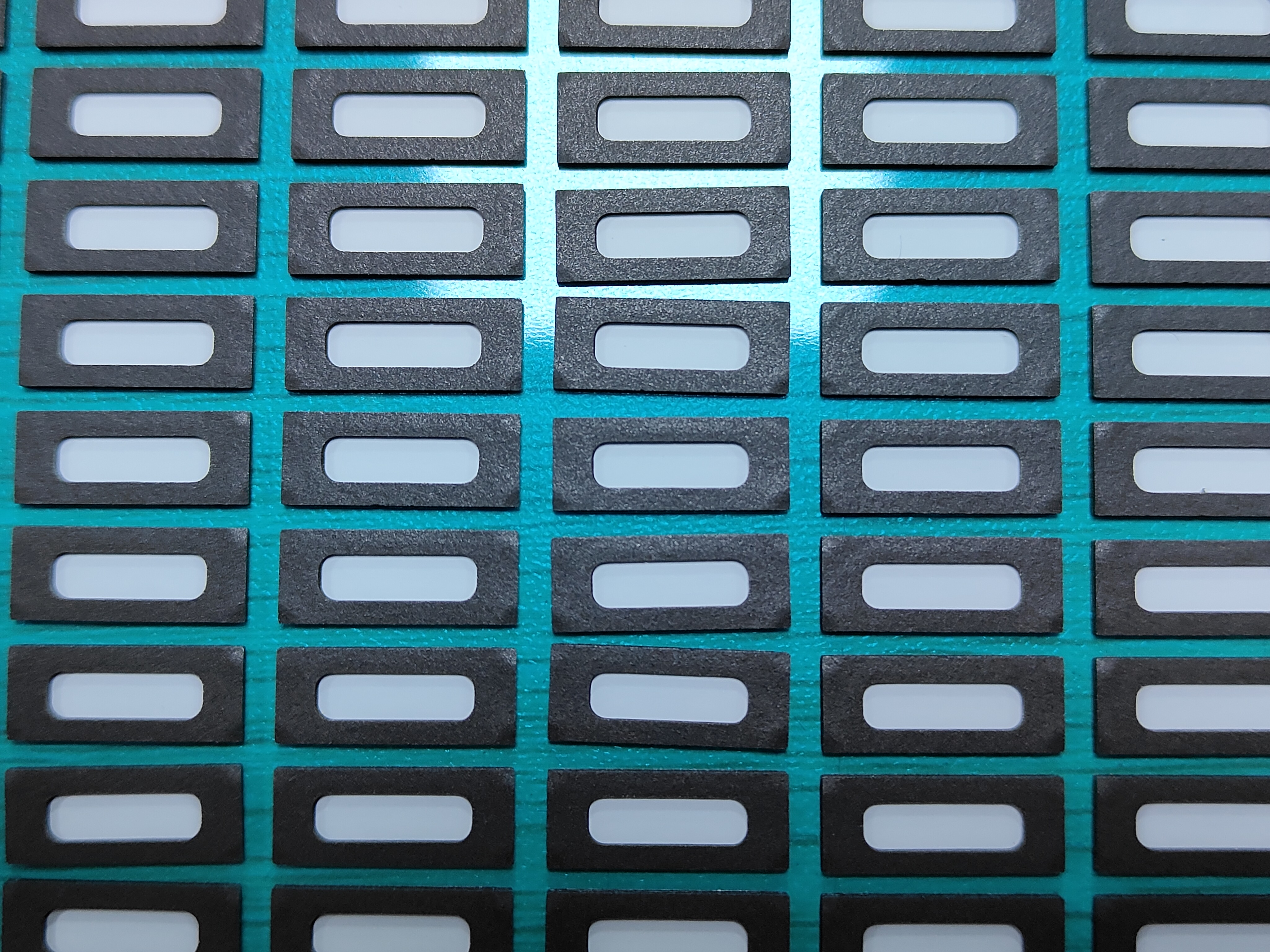
TPU (Thermoplastic Polyurethane) waterproof breathable membrane is a flexible, hydrophilic polyurethane-based film that allows water vapor to pass through its molecular structure while blocking liquid water. At Mimoyin, our TPU vent membranes are engineered for consumer electronics, wearable devices, and flexible enclosures where ePTFE may be over-specified or cost-prohibitive. TPU offers an excellent balance of waterproof performance, breathability, flexibility, and price — making it the preferred choice for mid-to-high volume consumer products.
Unlike ePTFE (which relies on microscopic physical pores), TPU achieves breathability through a hydrophilic molecular chain structure. Water vapor molecules are absorbed on the high-humidity side, diffuse through the polymer matrix, and are released on the low-humidity side. This mechanism means TPU membranes have no open pores in the traditional sense — they cannot be physically clogged by dust or oils, and they maintain consistent performance even after repeated thermal cycling.
How TPU Waterproof Breathable Membrane Works
The breathability of TPU is governed by moisture vapor transmission rate (MVTR), typically measured in g/m²/24h. Our TPU membranes achieve MVTR values ranging from 3,000 to 10,000+ g/m²/24h, depending on thickness and formulation. For sealed enclosure applications, this translates to effective internal humidity control — preventing condensation formation when ambient temperature drops below the dew point inside the housing.
Key operating characteristics:
- Flexible at low temperatures: TPU remains flexible down to -40°C, unlike some polyolefin films that stiffen and crack
- High tensile strength: Elongation at break typically 400–600%, making it suitable for applications with vibration or mechanical movement
- Hydrophilic (not microporous): No open pores = no dust clogging, no contamination from oils or particulates
- Heat-sealable: TPU can be directly heat-sealed to TPU or PU-based enclosures, enabling integrated venting solutions without adhesives
Technical Specifications
| Parameter | Typical Specification | Custom Range |
|---|---|---|
| Base Material | Hydrophilic TPU (thermoplastic polyurethane) | Custom TPU formulation available |
| Waterproof Rating | IP65 / IP67 (IEC 60529) | Up to IP68 (with optimized sealing) |
| MVTR (Breathability) | 5,000–8,000 g/m²/24h | 3,000–12,000 g/m²/24h |
| Operating Temperature | -40°C to +80°C | -40°C to +100°C (special grade) |
| Membrane Thickness | 0.08–0.3 mm | 0.05–0.5 mm (custom) |
| Tensile Strength | ≥ 30 MPa | Custom formulation |
| Elongation at Break | 450–600% | 300–800% (formulation-dependent) |
| Typical Dimensions | Ø6mm / Ø8mm / Ø10mm / custom shapes | Die-cut to customer specifications |
| Adhesive Option | Acrylic PSA (double-sided) | Silicone / heat-sealable edge |
| Typical MOQ | 2,000 pcs | 1,000 pcs (prototype runs) |
Note: TPU membrane is also available as a laminated composite — TPU film bonded to a support fabric (polyester or nylon mesh) for enhanced tear resistance in demanding assembly processes.
Application Scenarios
1. Wearable Electronics & Fitness Trackers
Wearables are exposed to sweat, rain, and frequent temperature changes (body heat vs. ambient). TPU membranes provide sweat-proof protection while allowing internal humidity to escape, preventing lens fogging and electronics corrosion. The film's flexibility also tolerates repeated flexion from daily wear. See our wearable solutions →
2. Smart Helmets & Audio Headbands
Helmet-mounted electronics (Bluetooth intercoms, action cameras, battery compartments) require venting that survives impact and sweat. TPU's high elongation and impact resistance make it ideal for this application. We supply custom-shaped TPU vents for major helmet brands.
3. Outdoor Apparel & Gear Electronics
Electronics integrated into outdoor gear (heated jackets, GPS trackers, smart backpacks) benefit from TPU's textile-compatible properties. TPU membranes can be laminated directly to the gear fabric, creating a fully integrated waterproof vent without additional sealing steps.
4. Consumer Robotics & Drone Electronics
Drones and robotic vacuum cleaners operate in dusty, humid environments. TPU vent membranes protect internal electronics while allowing rapid pressure equalization during altitude changes (drones) or temperature swings (robotic cleaners returning to docking stations).
5. Medical & Healthcare Wearables
TPU is biocompatible (many formulations are USP Class VI certified). This makes TPU vent membranes suitable for wearable health monitors, portable medical devices, and protective casings that require regular cleaning with alcohols or disinfectants.
TPU vs ePTFE: Which Should You Choose?
| Selection Factor | Choose TPU If... | Choose ePTFE If... |
|---|---|---|
| Operating Temp | ≤ 80°C (consumer / light industrial) | ≥ 100°C (automotive / industrial) |
| Chemical Exposure | Mild (sweat, rain, alcohols) | Harsh (acids, alkalis, solvents, fuels) |
| Budget | Cost-sensitive, high-volume consumer | Performance-first, lower volume / higher value |
| Flexibility Requirement | High flexion / movement expected | Rigid enclosure, minimal movement |
| IP Rating Needed | IP65–IP67 (splash / temporary submersion) | IP67–IP68 (continuous submersion / high-pressure wash) |
| Acoustic Transparency | Moderate (≤ 3dB loss acceptable) | High (≤ 1dB loss, acoustic-grade ePTFE) |
Read our full ePTFE vs TPU technical comparison →
Why Choose Mimoyin TPU Membrane
- Dedicated TPU production line — not a trading company, we extrude and cast our own TPU films
- MVTR testing on every lot — breathability is verified, not just specified
- Custom laminates available — TPU + support mesh, TPU + adhesive layer, multi-layer composites
- Fast sampling — 3–5 days for standard items, 7–10 days for custom laminates
- English technical support — drawings, material data sheets, and application guidance provided within 24 hours
Frequently Asked Questions
Is TPU membrane truly "breathable" or just waterproof?
TPU is both. The hydrophilic molecular structure allows water vapor transmission while blocking liquid water. MVTR values of 5,000+ g/m²/24h are typical for our standard TPU vent membranes — sufficient for most consumer electronics enclosures up to 500ml internal volume.
Can TPU membrane be used for IP68 applications?
IP68 with TPU is achievable, but requires careful enclosure design. The TPU membrane itself can block liquid water at 1 meter depth for 30+ minutes. However, the adhesive bond between the membrane and the enclosure is typically the failure point. We recommend over-molding or heat-sealing TPU membranes for IP68 designs, rather than relying solely on PSA adhesive.
Does TPU degrade when exposed to UV/sunlight?
Standard TPU formulations have moderate UV resistance. For outdoor applications with direct sun exposure (>500 hours/year), we recommend our UV-stabilized TPU grade, which shows <10% tensile strength loss after 1,000 hours of QUV accelerated weathering.
What is the shelf life of TPU membrane with adhesive backing?
12 months when stored at 20°C in original packaging. The acrylic PSA has a limited shelf life once the release liner is removed. For production planning, we recommend ordering in quantities that will be used within 6 months of delivery.
Can TPU membrane be die-cut into custom shapes?
Yes. TPU's thermoplastic nature actually makes it easier to die-cut than ePTFE (which can delaminate at the edges). We supply custom-shaped TPU vents with tolerances of ±0.1mm. Send us your DXF/DWG drawing and we will quote within 24 hours.
Is TPU membrane suitable for food-contact or medical applications?
Yes, with the correct formulation. We offer USP Class VI certified and FDA 21 CFR 177.1680 compliant TPU membrane grades. Specify your regulatory requirement when requesting a quote.
Ready to evaluate TPU membrane for your product? Contact our technical team for free material samples, MVTR test reports, and application-specific recommendations. English and Chinese support available.
Frequently Asked Questions
What waterproof rating do your membranes achieve?
Our ePTFE waterproof breathable membranes achieve IP67 and IP68 protection grades. They withstand immersion at 1 meter depth for 30 minutes (IP67) and continuous submersion (IP68), while maintaining stable airflow for pressure equalization.
Can you provide custom sizes and die-cutting shapes?
Yes, we offer full custom die-cutting services. We can produce membranes in any size or shape according to your specifications, including round, rectangular, and complex custom geometries. Our Class 10,000 cleanroom ensures precision cutting for production volumes.
What is the minimum order quantity (MOQ)?
We support both prototyping and mass production. Free samples are available for testing with 3-5 working days delivery. For mass production, MOQ is flexible depending on the product specification and can be discussed based on your project requirements.
What industries and applications do your membranes serve?
Our membranes are widely used in automotive electronics, lithium batteries, smart wearables, consumer electronics, LED lighting, medical devices, and industrial sensors. Applications include speaker acoustic vents, pressure balance vents, microphone waterproof membranes, and battery venting solutions.
How long is the delivery time for samples and mass production?
Free samples are delivered within 3-5 working days via express shipping. Mass production typically takes 7-15 working days depending on order quantity and customization requirements. We provide one-stop technical support from sample testing to mass production.